
Bench Warrants in McKinley County
A bench warrant grows out of a case that already exists. Something went wrong with a court event. In McKinley County the usual causes are failure to appear, failure to pay, failure to comply, contempt, probation trouble, or a problem with release conditions. It is not the same animal as a probable-cause arrest warrant, and it is not automatically a new charge. To find the case, run New Mexico Case Lookup and call the court the result names. District Court answers at 505-863-6816. Gallup Magistrate Court answers at 505-722-6636. Gallup Municipal Court answers at 505-863-4469.
Gallup's Three McKinley Bench-Warrant Triggers
Gallup Municipal Court names three plain triggers for a McKinley County bench warrant: failure to appear, failure to comply, and failure to pay. The distinction matters. Money alone may not fix a missed appearance, while a failure-to-pay case usually carries a specific balance and fee.
| Trigger | What it can mean | First question |
|---|---|---|
| Failure to appear | A required court setting was missed | Can the clerk schedule an arraignment or new date? |
| Failure to comply | A court condition was not completed | Which condition remains, and does a judge need to review it? |
| Failure to pay | Fine, cost, or ordered payment remains due | What is the full balance and payment-plan route? |
Gallup Municipal Court does not handle child support, divorce, domestic violence, or protection orders in McKinley County. Those belong on the District Court route.
How a McKinley County Bench Warrant Is Issued
Issuance follows a short sequence in McKinley County. The court records the case event. The judge signs the warrant or order. The clerk then enters everything into the court and law-enforcement systems tied to the case. Form 9-212C supplies the statewide framework for Magistrate and Municipal Courts, though it arrives blank rather than filled in as a McKinley warrant. Its fields cover the court and case, defendant information, the charging police department, charges, trigger facts, the release choice, the execution area, and the law-enforcement-system entry. That is why a public case result can leave out conditions the court's own form carries. The official form itself shows the full layout.
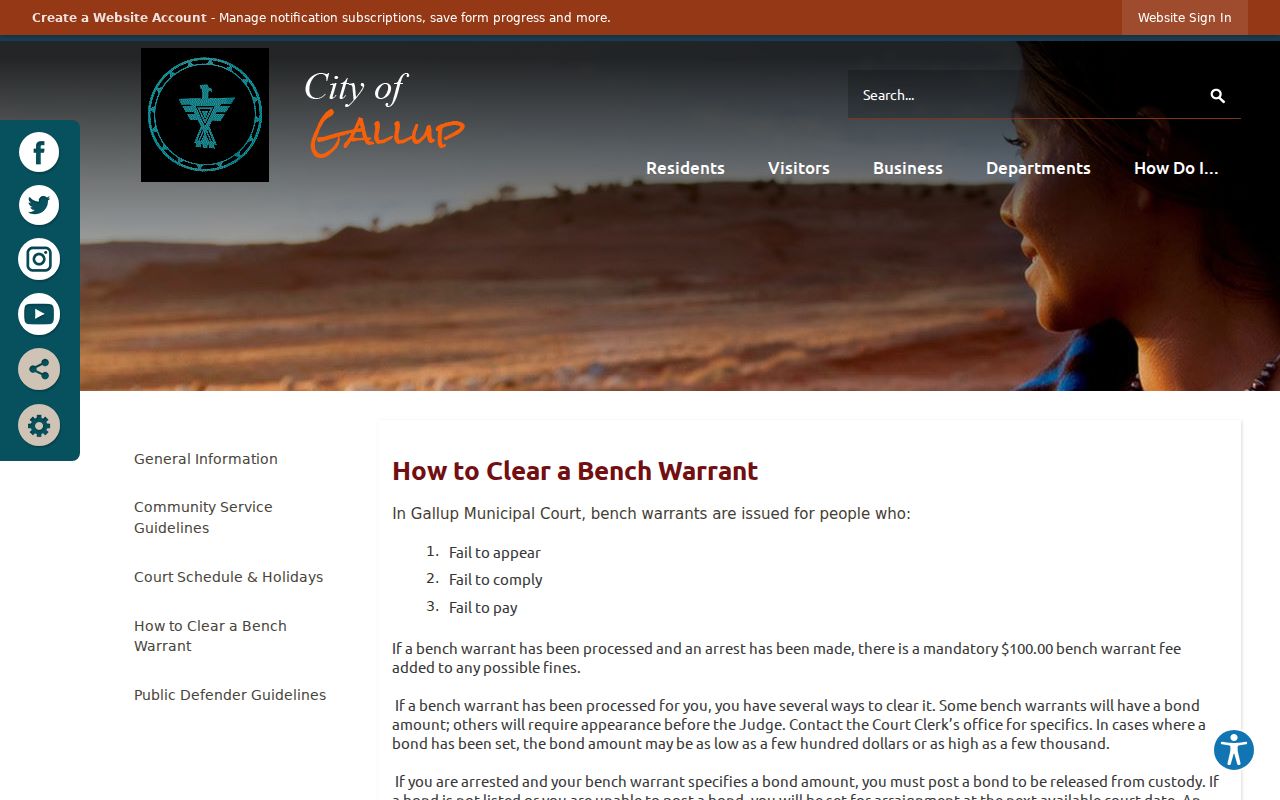
The Gallup bench-warrant instructions tie payment, bond, and arraignment options together for McKinley County. The court, not any third-party site, controls the case.
Bench Warrant vs Arrest Warrant
Both types command an arrest in McKinley County. Their starting points differ. A bench warrant answers a compliance failure inside an existing case, while an arrest warrant follows a criminal filing and a probable-cause showing under Rule 5-208. A summons just directs a person to appear and commands no arrest.
| Question | Bench warrant | Arrest warrant |
|---|---|---|
| Typical trigger | Missed appearance, payment, or condition | Complaint, affidavit, or indictment with probable cause |
| Case setting | Existing case compliance | Criminal case initiation or advance |
| Common next step | Payment, hearing, bond, or judge setting | Arrest, notice, bond, and first appearance |
New Mexico forms speak of bench warrants and failure to pay. "Capias" is a label from other states, not the term McKinley County materials use.
McKinley Form 9-212C Trigger Menu
The statewide form's trigger menu gives a McKinley County reader plain words for matching a docket event to a warrant notice. It lists failure to appear as ordered, failure to appear on a subpoena, failure to meet release conditions, contempt, failure to pay fines or costs, failure to comply with probation, and failure to attend a first-offender program. A court can also write in another fact. Treat the trigger as a clue, not a resolution order. The clerk can say whether McKinley County needs payment, a hearing, a plea, a new setting, counsel, or an appearance before the judge. Do not assume one court's option carries over to another. One trigger can point several directions. Ask before acting on a guess.
How to Resolve a McKinley County Bench Warrant
Start with the issuing court in McKinley County. Ask for the warrant's current status. Gallup Municipal Court says some warrants list a bond and others require a judge. Its failure-to-pay instructions require the outstanding fine, court costs, and a $100 bench-warrant cost before recall in the applicable case.
- Identify the court, case number, trigger, balance, and bond or judge-appearance instruction.
- Ask whether a voluntary appearance or scheduled arraignment is available.
- If payment is involved, ask for the full amount and an accepted method before sending money.
- If payment is not possible, ask about a hearing or payment arrangement under the court's rules.
- Keep the receipt or court order and call again to confirm the docket and any remaining condition.
Paying money resolves what is owed. It does not resolve a missed setting or another order. Only the court can explain the rest of a McKinley County case.
McKinley Failure-to-Pay Bench Warrant Safeguards
Rule 8-206.1 materials describe notice, a hearing route, and ability-to-pay safeguards for municipal failure-to-pay matters. Rule 6-207.1 covers payment arrangements in Magistrate Court. Neither rule guarantees any particular result in McKinley County. There is no blanket waiver.
Ask for the hearing route. If the issue is inability to pay, tell the clerk and ask whether the court requires a hearing or can set an individualized arrangement. Do not ignore a notice while assuming nonpayment alone answers the court's question.
Gallup's published page says cash bond may go toward fines at sentencing when the payer authorizes it. Any balance left over comes back by check 7 to 10 business days after adjudication. Confirm the terms in the McKinley County case directly.
Which McKinley County Court Issued It
Three courthouses, three dockets in McKinley County. District Court sits at 207 W. Hill Ave., second floor, Room 200, and handles district criminal matters. Gallup Magistrate Court, at 285 Boardman Drive #C, takes state misdemeanor, DWI, traffic, and preliminary-hearing cases. Gallup Municipal Court, at 451 Boardman Drive, covers city ordinance, traffic, DWI, petty-misdemeanor, animal-control, and code cases.
District Court Clerk's Office
Felony and district compliance questions.
505-863-6816
Gallup Magistrate Court
State lower-court bench-warrant questions.
505-722-6636
Gallup Municipal Court
City case recall, payment, and arraignment questions.
505-863-4469
Use the court finder when the case name is unclear. Tribal and federal warrants in McKinley County go through their own court or agency.
McKinley Safe Surrender and Voluntary Appearance
New Mexico Courts ran a Gallup Safe Surrender event in March 2026 for outstanding bench warrants from any New Mexico Magistrate Court. The official release described voluntary appearance and possible consideration of a new date, a payment plan, or another compliance option. It was one dated event, not a standing walk-in schedule. Before surrendering in McKinley County, confirm the current event, covered court, place, time, and required documents through New Mexico Courts. Voluntary appearance promises no custody outcome, no dismissal, and no fixed bond. Ask for written proof of whatever setting or clearance results. The official announcement spells out what the program covered.
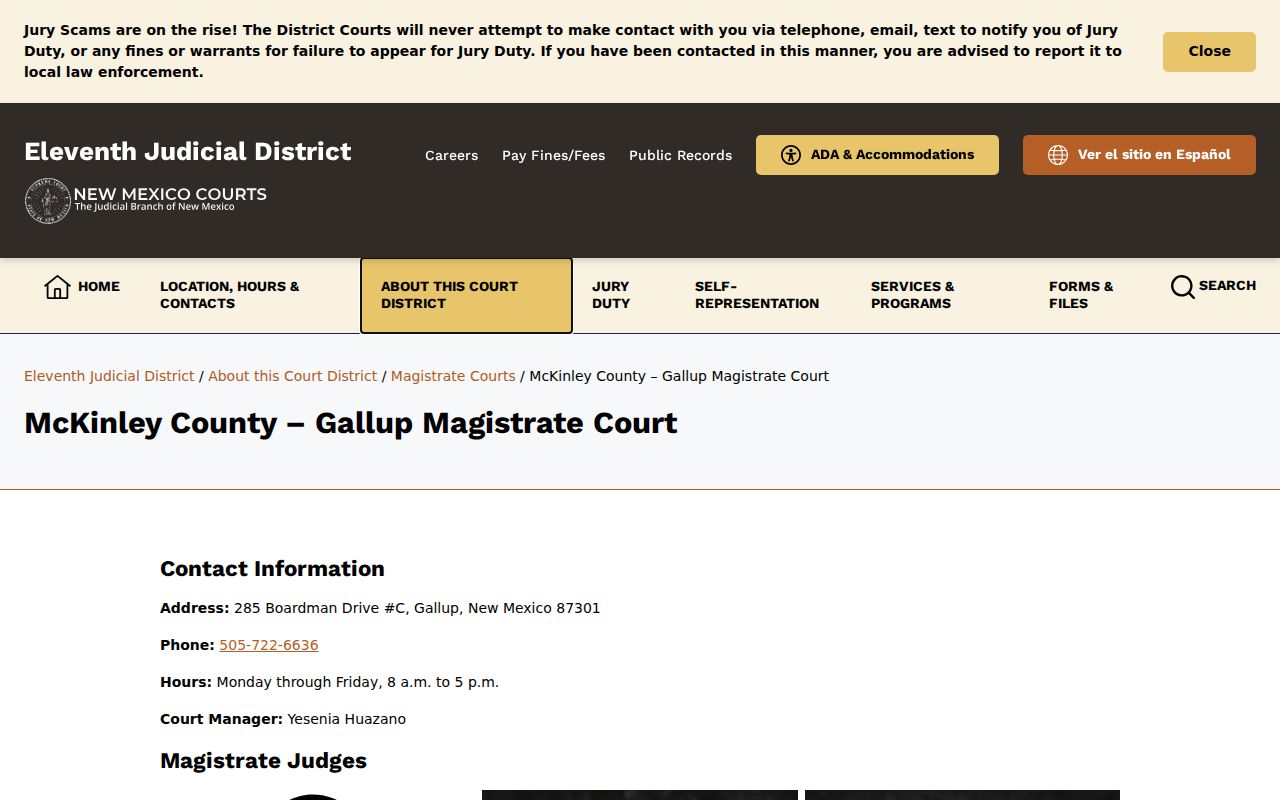
The Gallup Magistrate Court page confirms the lower-court contact route in McKinley County. The clerk remains the source for a specific warrant.
McKinley Bench Warrant Records Through MCSO Civil
The MCSO Civil Division handles transports tied to outstanding bench warrants in McKinley County. That tells you who moves people, not who clears the paper. Service is one thing; recall is another. To clear a McKinley County warrant, call the issuing court first, then ask MCSO Records whether any service, transport, or agency record exists. After an appearance, request the return, recall, or clearance entry from the court. A lingering flag may simply need time to update. And a payment can settle only the financial part of a case. The Sheriff's Office cannot set a city arraignment or alter a District Court order.